Table of Contents
Meet the Uzbek chef Philadelphia food lovers are falling
in love with Dilbar Nuridinova.
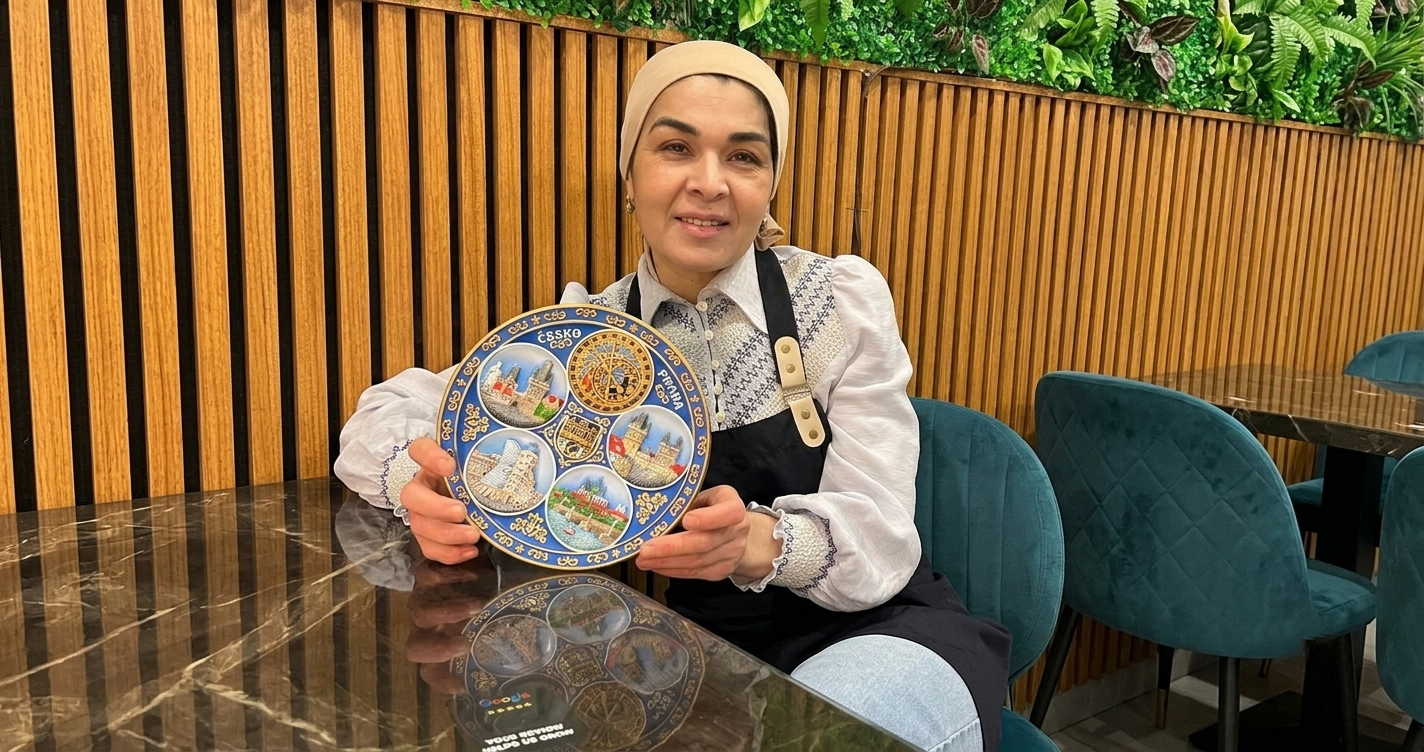
Dilbar. In Uzbek, “Dil” means heart, and “Bar” means to
carry. To carry a heart. And if you have ever eaten at
Perfect Together Restaurant on South Street in
Philadelphia if you have tasted the Plov, the Manti,
the slow-braised Kazan Dumgoza then you have already
felt what that name means, even if you did not know it.
This is the story of Chef Dilbar Nuridinova. The woman
behind every dish at Perfect Together Restaurant
Philadelphia. A story that begins in the ancient city of
Bukhara, passes through the hardship of post-Soviet
Uzbekistan, winds through twelve years of restaurant
kitchens in the Czech Republic, and ends finally,
wonderfully in her own restaurant on South Street,
Philadelphia.
It is not a short journey. But it is one worth knowing.
This is the story of how an Uzbek chef in Philadelphia
turned hardship into a thriving restaurant.
A Name That Carries a Heart
Dilbar Nuridinova grew up in Bukhara one of the oldest
and most historically significant cities in all of Central
Asia. For thousands of years, Bukhara sat at the heart of
the Silk Road, the ancient trade route that connected
China to Europe. Merchants, scholars, poets, and travelers
passed through its streets. The city is defined by
centuries of culture, architecture, and food.
It is the kind of place that stays with you. No matter
where life takes you, Bukhara never fully leaves.But when Dilbar was just thirteen years old, the world
she knew began to fall apart.
The Soviet Union collapsed in 1991. For many families
in Uzbekistan, it was not an abstract political event
it was immediate and devastating. Jobs disappeared.
Factories closed. Shops ran empty. Dilbar watched her
parents struggle to keep their family afloat, and she
decided, even as a teenager, that she would help.”I tried to help while continuing my studies,” she
recalls.
She graduated as an accountant a practical choice,
a sensible plan. But the economy had other ideas.
There were no jobs. The country she had grown up in
was rebuilding itself from the ground up, and the
process was slow and painful.
She did what many people do when the path forward is
blocked. She looked for another way.
Starting Over From Bukhara to Prague
By the time Dilbar was a young mother with two children, it was clear that staying in Uzbekistan meant an uncertain future. Years before she would become a respected Uzbek chef in Philadelphia, she faced her hardest decision yet.
She and her husband made the decision that millions of
families around the world have made throughout history:
they would leave.Their destination was the Czech Republic. A new country.
A new language. A new culture. A place where, they hoped,
their children could have a better life.
Three Days A New Country A Kitchen
What happened next says everything about who Dilbar is.
Three days after arriving in the Czech Republic
three days she found a job.
She was a dishwasher in a restaurant kitchen.
It was not the career she had trained for. It was not
the life she had imagined. And it was far, far harder
than she had expected.
“It was tough there were injustices, setups, and
hardships. I cried often,” she says.
The kitchen was demanding. The language was foreign.
The culture was different in ways she had not
anticipated. And the hardest part of all? Her children
had to stay behind in Uzbekistan while their visas
were processed. She worked and waited and missed them
every single day.
But she kept going. “Those difficulties made me stronger,” she says.
“At least here, I had a job that put food on the table.”
There is something quietly remarkable about that
statement. Not self-pity. Not bitterness. Just clarity:
this is hard, and I am doing it anyway.
Twelve Years From Dishwasher to Manager
What followed was twelve years of unrelenting work,
learning, and growth.
Dilbar washed dishes. She watched. She listened. She
learned the rhythms of a professional kitchen the
timing, the technique, the standards, the pressure.
She absorbed Czech cooking the way she had absorbed
Uzbek cooking as a child: with full attention and
genuine love.
And then her employer noticed.
The restaurant owner promoted her to manager a role
she would hold for seven years. Not a token promotion.
A real one, earned through years of demonstrated skill,
reliability, and leadership. She managed staff, handled
operations, maintained standards. She had gone from
washing dishes at the bottom of the kitchen hierarchy
to running the place.
But she was not finished learning.
“Still eager to learn more, I worked in various cafés,
gaining new skills,” she says.
This is the part of Dilbar’s story that most people
would overlook. After becoming a manager after
achieving something genuinely impressive she chose
to start over again, to learn again, to be a beginner
again. Because she was not chasing a title. She was
chasing knowledge.
By the time those twelve years were complete, she did
not just understand Czech cuisine. She loved it.
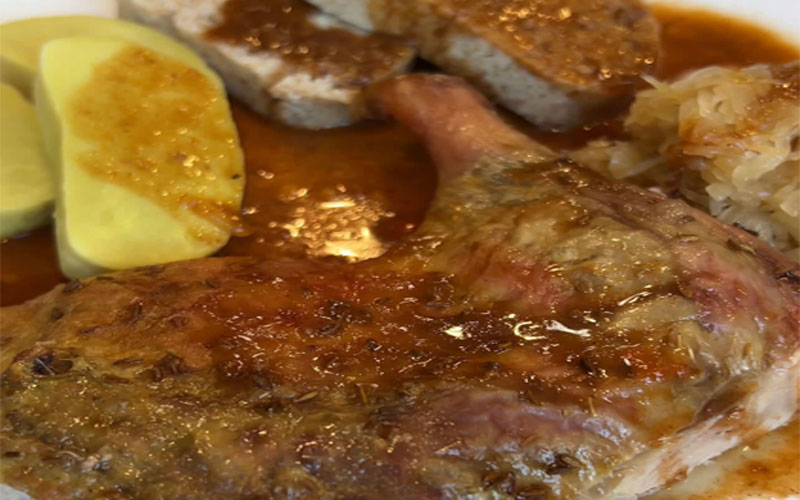
She had learned to prepare Svichkova the slow-cooked
beef in creamy sauce that is the pride of Czech cooking.
She had mastered roasted duck, goulash, schnitzel,
and potato dishes that most international chefs never
learn. Czech cooking had become, in the deepest sense,
part of who she was.
But Uzbek cooking the flavors of Bukhara, the recipes
of her parents and grandparents had never left her This was the foundation that would one day make her one of Philadelphia’s most celebrated Uzbek chefs.
The Idea That Would Not Leave
Somewhere in those twelve years of professional kitchen
work, a thought kept returning to Dilbar. She wanted to share her food. Not just Czech food
though she loved it deeply. Her food. The home-cooked
recipes her mother had made. The Plov her grandmother
had prepared for celebrations. The Manti she had
folded by hand as a child in Bukhara. The dishes that
carried the smell of her home and the memory of
everything she had left behind.
“Working in restaurants strengthened my passion for
food,” she says. “And I realized that I wanted to share
my home-cooked recipes with the world.” That is a simple sentence. But behind it is twelve
years of hard work, thousands of miles of distance
from home, tears in foreign kitchens, and a love
for food that refused to be extinguished by any
of it.
America and a Dream Finally Within Reach
Eventually, the family moved to America.
Philadelphia. A city built, in many ways, by people
who came from somewhere else. A city that has always
made room for new stories. Dilbar continued working in restaurants. She learned
the American kitchen. She adapted. And all the while,
the idea of her own restaurant grew stronger.
It was her Daughter Gulshan who would ultimately help make
it happen. Together, they built Perfect Together
Restaurant & Cafe a place that would serve both
Uzbek and Czech cuisine, because both were genuinely
part of the family’s story. Not a marketing concept.
A biography.
“I am so grateful that my dream of opening an
authentic Uzbek restaurant is finally coming to life,”
Dilbar says. “I can’t wait to share with you the
staple dishes my parents and grandparents made for
me as I was growing up.”
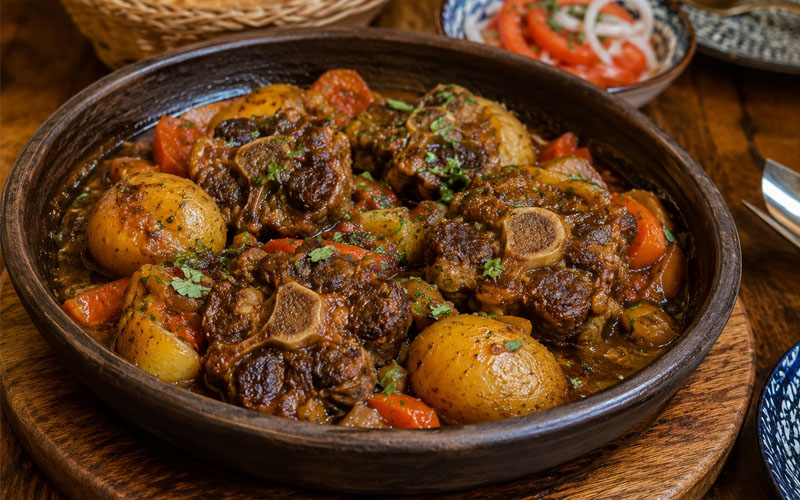
What You Taste Cooking by Philadelphia's Own Uzbek Chef
When you sit down at Perfect Together Restaurant
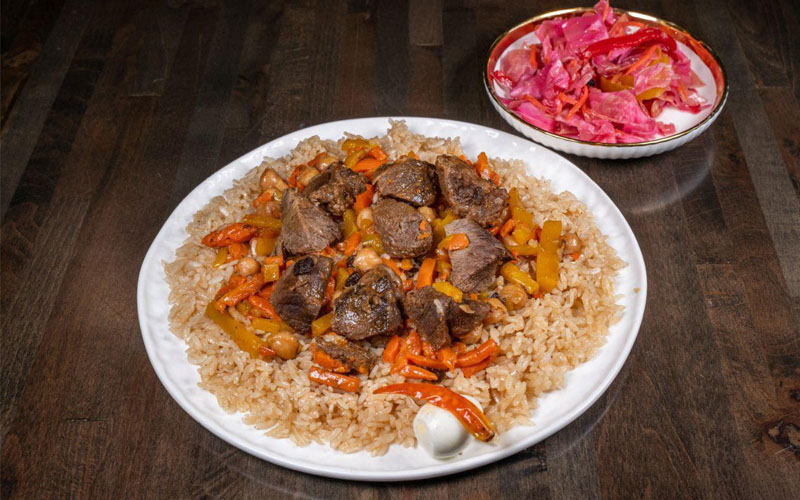
Philadelphia and order the Bukharian Plov the
slow-cooked rice with beef, carrots, and chickpeas
you are not just eating a dish. You are tasting
a recipe that has been passed through generations
of a family in Bukhara. A recipe that survived
the collapse of the Soviet Union, twelve years in
Czech kitchens, and an ocean crossing to Philadelphia.
Somewhere in those twelve years of professional kitchen work long before she became an Uzbek chef in Philadelphia a thought kept returning to Dilbar.
When you order the Kazan Dumgoza the Uzbek oxtail
pot roast you are eating something that Chef Dilbar
has perfected over a lifetime. When you try the
Svichkova or the Roasted Duck, you are tasting twelve
years of professional mastery, learned through hard
work in a foreign country far from home.
Every plate at Perfect Together carries a story.
And now you know whose story it is.
This is what makes Dilbar one of the most respected
Uzbek chefs in Philadelphia today.
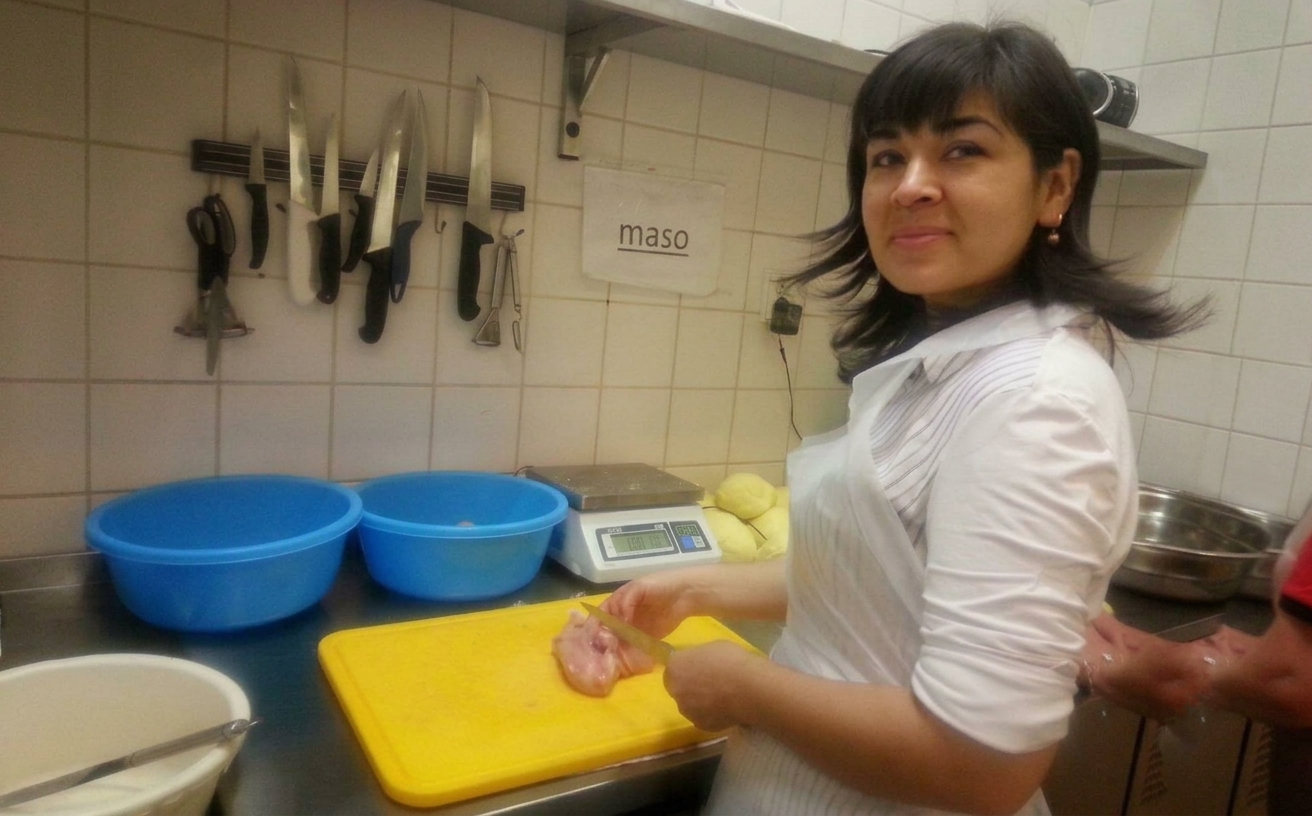
Come and Taste the Story
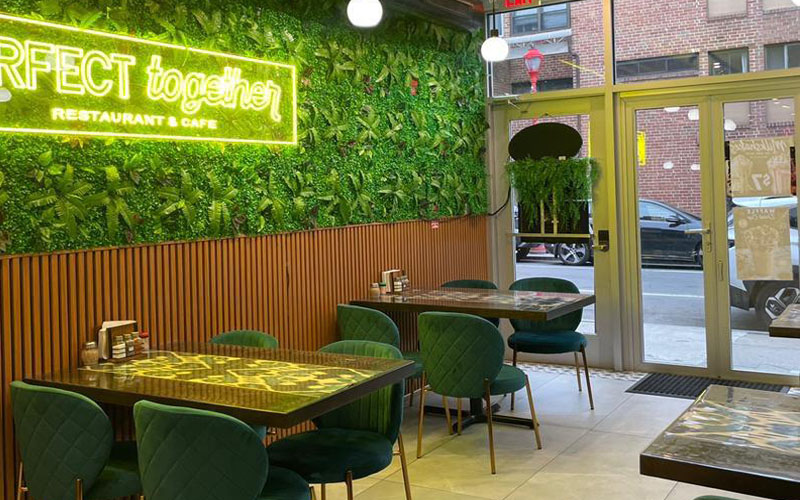
Perfect Together Restaurant & Cafe is located at
738 South Street, Philadelphia, PA 19147.
Chef Dilbar and her family are here Tuesday through
Sunday, preparing every dish from scratch the Uzbek
recipes of Bukhara and the Czech classics of twelve
years of professional kitchen work, served together
under one roof, in one of Philadelphia’s most
unique halal restaurants.
📍 738 South Street, Philadelphia, PA 19147
📞 215-413-5802
🕐 Tuesday – Sunday | 10:00 AM – 9:00 PM
Monday: Closed
All dishes are 100% halal, made fresh daily.
Frequently Asked Questions?
Who is the chef at Perfect Together Restaurant Philadelphia?
The chef at Perfect Together Restaurant Philadelphia is Dilbar Nuridinova, a respected Uzbek chef in Philadelphia who grew up in Bukhara, Uzbekistan…
What does the name Dilbar mean?
Dilbar is an Uzbek name meaning “one who carries a
heart.” In Uzbek, “dil” means heart and “bar” means
to carry. It is a name that reflects warmth,
generosity, and care qualities that define both
Chef Dilbar and the food she prepares.
What kind of food does Chef Dilbar cook?
Chef Dilbar specializes in both authentic Uzbek cuisine
including Plov, Manti, Kazan Dumgoza, and Samsa
and traditional Czech cooking, including Svichkova,
Roasted Duck, and Czech Goulash. All dishes are
100% halal and made from scratch daily.
Where is Perfect Together Restaurant in Philadelphia?
Perfect Together Restaurant & Cafe is located at
738 South Street, Philadelphia, PA 19147. Open
Tuesday through Sunday, 10:00 AM to 9:00 PM.